 On a particularly hot day, a Royal Australian Air Force English Electric A84 Canberra bomber drops to within 25 feet as thrill-seeking mechanics get ready for the visceral experience of 13,000 lbs of Rolls Royce Avon power full in the face. RAAF Photo
By Dave O'Malley
For the past few years, I have dumped any good shots of low level that I came across on the web into a folder on my hard drive, never knowing what to do with them. Last week, my great friend Ian Coristine sent me an e-mail with a collection of low level photos someone had put together. Many were already in my folder. So, here finally is the contents of my folder, in tribute to my friends Greg “Hard Deck” Williams, whose aggressive attitude once made him engage a pair of A-10s in ACM with his Moonie (and win) and Ian Coristine, who never felt he was flying unless his floats swished in the long grass in a morning sunrise.
 Ian Coristine inspects the alfalfa in his Quad City Challenger ultralight.
• Crayfish, crawfish, crawdads
Ian Coristine inspects the alfalfa in his Quad City Challenger ultralight.
• Crayfish, crawfish, crawdads
They loved to fly low in World War Two
 A Douglas A-20G Havoc night fighter of the 417th Night Fighter Squadron does a little daylight low flying down in the weeds possibly near the Orlando, Florida base where they were formed. Their first deployment was to Europe where they immediately re-equipped with Bristol Beaufighters. Today, the unit still trains for a night time job, but flying the F-117 Nighthawk or so-called “Stealth Fighter”.

A P-40 flies down the beach at extreme low level, as Marines practice an amphibious landing somewhere in the Pacific. In order to get this photo, the photographer standing on the beach would have had to have his back to the oncoming P-40 trusting that pilot would do a “buzz job” of the beach and not his hair. Photo via Project 914 Archives, Steve Donacik
 A squadron of Luftwaffe Ju-52 Junkers stream low over the Russian countryside near Demjansk, south of Leningrad. In February to May of 1942, the Germans were surrounded by the Red Army. Supplying the Germans during and after the "Demjansk Pocket”, was the role of the air force. Here, low flying in the slow transports was more a survival tactic than a joyride. Photo via Akira Takaguchi
 Thought to have been taken in the region of Canterbury, New Zealand in 1944, this shot of an Airspeed Oxford scaring the beejeesus out of half the waiting airmen while the other half remain calm, is a beauty. Photo via Joe Hopwood.

A USAAF P-47 Thunderbolt at extreme low level. Note that the sweep of the camera's pan has bent the buildings in the background

Another shot that has the same effect of bending the buildings in the background (see previous photo). Like our own Spitfire XIV RM873, Griffon-powered PR Spitfire XIX PS890 was sold to the Royal Thai Air Force after the war. She is seen here with 81 Squadron markings and being put through her paces down low at RAF Seletar, Singapore in the summer of 1954 just before her sale. In 1961, PS890 was donated to the Planes Of Fame Museum in California. It was eventually restored and took to the skies again in 2000, albeit with clipped wings and contra-rotating props. It was then purchased by Frenchman Christophe Jacquard and taken to Duxford for the wingtips to be added and a single 5-bladed propeller installed.
 While researching images for our P-40 stories over the past year I came across a massive collection of marvelous wartime photos - mostly of P-40s collected by Steve Reno. This P-40 pilot is risking his life only a little less than the man taking the photo of this ridiculously low level pass across the runway. He’s not much higher than he would be if he was standing on his landing gear! If you trace the invisible line of his prop arc, this skilled numbskull’s tips are only about 4 feet off the ground. Photo via Project 914 Archives, Steve Donacik

For many attacking aircraft, safety lay down low in the wave tops beneath enemy radar coverage. Here, a squadron of Douglas A-20 Boston bombers of the RAF's 88 Squadron head to the target over the North Sea. 88 Squadron crews became highly proficient in low-level bombing.
In December 1942, almost 100 aircraft from 2 Group attacked the Philips Valve Factory at Eindhoven including 12 Bostons from 88 Squadron at RAF Swanton Morley. They were led by W/C Pelly-Fry, the CO of 88 Sqn. Pelly-Fry's
aircraft was hit just after he had released his bombs. With much-reduced hydraulic pressure, a large hole in the starboard wing and a coughing and spluttering starboard engine, he narrowly avoided the rooftops but found that the aircraft could not climb above 800 ft, nor could he keep up with the others on the way home. Despite his difficulties, he fought off two FW190s before eventually managing a belly-landing back at Oulton. Deservedly, he was awarded a DSO; the raid also resulted in the award amongst the other crews of another DSO, two DFMs and eight DFCs.
But not all the low-flying was "in the face of the enemy". A former 226 Squdron flight commander, a navigator, related to me one such series of antics by which his crew 'nearly came a cropper'. The pilot and captain of his Boston was Sqn Ldr Shaw Kennedy (who became, after the war, the Air Attache in Prague). Kennedy was a brash Irishman with a wild and wicked sense of humour. His favourite jolly jape was to buzz the German and Italian prisoners of war working the fields around the perimeter of Swanton Morley airfield.
At this point in the story, it helps to understand that Swanton Morley airfield is situated on the top of the only significant hill in central Norfolk. Despite being a mere 150ft or so above sea level, the ground falls away significantly on the north and eastern edges of the airfield into the valley of the River Wensum. Kennedy's "standard approach" was from the east, hugging the bottom of the river valley before banking sharply to port and roaring up the slope at full power over the startled POWs, who immediately hit the dirt to avoid getting a haircut.
Kennedy would then stay low, heading south across the grass airfield, before banking steeply to port again across a small pond, surrounded by trees, to the south of the hangars. He would shave the tops of the trees which, to this day, are shorter in the middle than at the outside, due to his "pruning". This unorthodox procedure worked fine until one, almost fateful, day. As Kennedy rolled out of the left bank to scare the POWs again, his navigator (sitting in the nose) noticed that the POWs had all ducked down well before the Boston would be on them. Sensing that the POWs were up to something, he had no time to tell Kennedy to pull up as all the POWs threw their farming tools in the air as high as they could - straight into the path of the Boston. There were fleeting visions of rakes and spades flashing over the wings and the faint ping of something ricocheting off a prop. Fortunately, Kennedy managed to land the Boston safely. He never buzzed the POWs again! (Story from Squadron Leader Alan. R. James (Ret'd)

Three Japanese Mitsubishi G4M Betty bombers with torpedoes aboard, scream extremely low in to the target at Guadalcanal. At this height, the bombers are well set up for a launch of their “fish” and at the same time, as witnessed by the flak explosions above them, somewhat safe from AA fire.
There is often a price to pay.

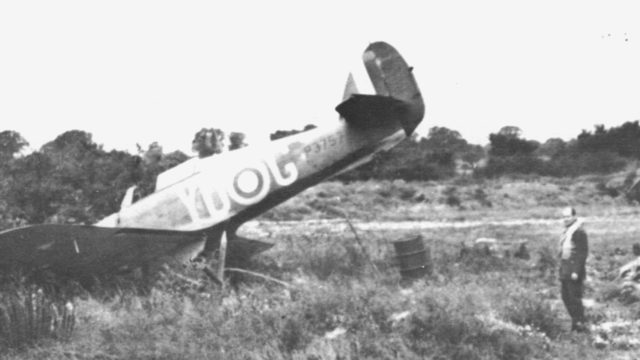
'One more beat-up, me lads.' Flying Officer Cobber Kain, DFC, a New Zealander and the RAF's first ace of the Second World War makes a fatal mistake. On the 6th of June 1940, Kain was informed he would be returning to England the next day. The following morning, a group of his squadron mates gathered at the airfield at Échemines, France to bid him farewell as he took off in his Hurricane to fly to Le Mans to collect his kit. Unexpectedly, Kain began a "beat-up" of the airfield, performing a series of low level aerobatics in Hurricane I L1826. Commencing a series of "flick" rolls, on his third roll, the ace misjudged his altitude and hit the ground heavily in a level attitude. Kain died when he was pitched out of the cockpit, striking the ground 27 m in front of the exploding Hurricane. Kain is buried in Choloy Military Cemetery.

Some aircraft, such as this Spitfire, reach that fine line between crashing and flying low... about 12 inches too low in the case of this 64 Squadron Spitfire with shattered wooden blades. The aircraft, no doubt shaking badly was nursed back to the safety of an Allied base.
 An Allied pilot flying a Macchi 200 buzzing Taranto, Italy. It sadly proved that these kind of stunts aren't without danger as the pilot hit a member of the ground crew and more or less decapitated him. The pilot hadn't noticed a thing and after landing was confronted with a dent in his wing's leading edge, containing skull fragments.

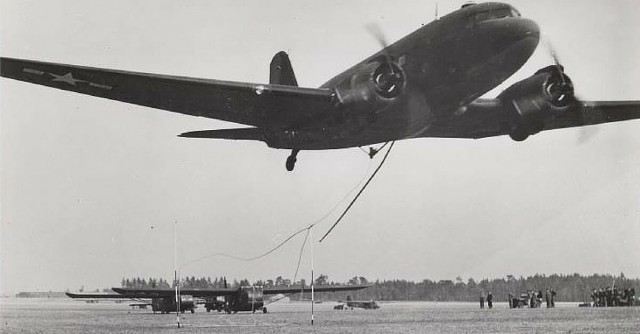
I didn't want to include any shots of an aircraft landing or taking off, just low level flight, But this shot of a Lockheed Lodestar dragging its wing in the turn out is interesting enough to include.
The aircraft crashed and burned.

A P-47 of the 64th Fighter Squadron, while on a mission to Milan, struck the ground during a low level strafing run. Despite the bent props and crushed chin, the pilot nursed the Jug 150 miles home to Grosseto. Photo via Hebb Russell
The strange end of Donald Scratch
 Not an extreme low level shot, but this image of a P-40 chasing a B-25 Mitchell over buildings in the Vancouver area is worth a lengthy explanation. Jerry Vernon explains:
"Sgt. Scratch was born in Saskatchewan, July 7, 1919, and enlisted in the RCAF in Edmonton, as R60973 AC2 on July 20, 1940. He earned his wings as a Sergeant Pilot and flew with that rank for a long time. He flew Liberators from Gander, Newfoundland, as a co-pilot on anti-submarine patrols. Scratch was good at his job and was eventually raised to commissioned rank. On two separate occasions, Scratch stole multi-engine bombers and engaged in lengthy low-level and dangerous flying/ Jerry Vernon explains:
“Scratch had injured his leg in a previous Bolingbroke accident, and the powers-that-be felt he did not have enough strength in the leg to control the rudders on a Liberator if he lost an engine. For that reason, both at Gander and at Boundary Bay, they would not give him a captain's qualification, which is what pissed him off.
On the first occasion, they were concerned that he was going to fly the aircraft down to New York City, but he thought better of it, and returned to base. He later told classmates at Boundary Bay that had been his intention. He had taken a Liberator without authority at 0345 hrs on 20 Jul 44, and "for 3 hours and 10 minutes engaged in an exhibition of dangerous low flying over the aerodrome and vicinity." He told the Court of Inquiry that, after 3 years of operational flying on the East Coast, he was determined to participate in another theatre of war.
I suppose that qualified pilots were in such demand that they allowed him to re-enlist as a Sgt. Pilot less than 3 weeks after being dismissed by General Court Martial. Former CPAir PR head Jim McKeachie, a member of the Quarter Century in Aviation Club and 801 Wing, Air Force Assn. of Canada, was on the same course as Don Scratch at Boundary Bay, and had dinner with him in the mess that night before the event here. McKeachie then went off on a leave pass and was not on base the next morning when the Mitchell escapade took place....however, Jim does have his own version of the story, which I have heard from him several times!!
Scratch began a 6-week course at No. 5 OTU as a Mitchell 2nd Pilot and was due to graduate on 11 Dec 44. His Flight Commander regarded him highly and stated in evidence that "He was a very keen, average pilot. He was neat in his appearance and had a pleasant personality. He was very quiet and generally well-liked."
Apparently Scratch wasn't normally a heavy drinker, but got drunk that night before attempting to steal a Liberator and then stealing the Mitchell. Others in his barrackroom stated that they had never seen him drunk...but the Bar Steward testified that he had sold him between 12 and 18 bottles of beer that night!! He attempted to persuade a WD to come with him, but she wisely refused. There is no mention in the file of the Liberator hitting a bridge....the file says it was bogged down in the mud, and a 2/3 full mickey of Jamaica Rum was found dropped down between the pilot seats, with Scratch's fingerprint on it.
The Court of Inquiry notes that he had been drinking beer in the Mess and did not occupy his quarters that night. At 0200, he visited the Stn. Signal Section and offered a drink to the WD on duty.
He did not fly down to Seattle, but the RCAF were afraid that he would, and the P-40s had instructions to shoot him down if he crossed the border, which he did not do. Otherwise, if he stayed inside Canada, they were to stick with him and try to force him to land. He did not fly down Granville St. downtown below the level of the building....as far as I am concerned, it would be physically impossible to do with a Mitchell!! However, per statements from the CO, it sounds like he did fly over parts of the city.
He did fly around and "visit" several of the RCAF stations in the area, possibly Pat Bay and I think Abbotsford for sure....the Court of Inquiry file only mentions Abbotsford and an extensive beat-up of Boundary Bay. In fact, as a kid during WW II, I lived on 176th St., several miles due West of the Abbotsford Airport, and one morning a Mitchell came over our farmhouse at chimney-top level, and I have suspected it may have been Scratch. However, the date seems to rule it out, unless I was back visiting with my grandparents at the time. I moved into Vancouver in the Summer of 1944 and I don't know when my grandfather sold the farm, as he was living over near Cloverdale by the Summer of 1945, as I recall being there when VJ-Day occurred.
I have seen a photo of him buzzing the CO's morning parade at Boundary Bay, well below tower and hangar height. It is in the C of I file in Ottawa, which as I recall also contains some newspaper clippings.
The C of I file says that he beat up Boundary Bay from about 0600 to 0700, then headed for Abbotsford. He then returned and beat up the buildings, runways and parked aircraft at Boundary Bay, incredibly missing some objects by inches. At one point, he flew the entire length of the tarmac between the line of parked aircraft and the hangar, with his props inches off the ground. He could be seen in the cockpit without headphones on, so he could not hear tower transmissions to him.....the CO had gone to the tower at 0630 and taken personal charge of the situation.
The Court of Inquiry decided that, even if he had been drunk when he started out, after several hours of flying and strenuously throwing the aircraft around, he was probably cold sober by the time he crashed.
The C of I ruled that it was not a suicide, as some thought it was. He had flown the aircraft for several hours, up to the point that the fuel should have been exhausted. Mitchell HD343 had taken off at approximately 0454 hrs from the unlit runway and flew around for 5 hrs and 15 minutes until crashing at 1010 hrs, after about 5 hrs and 15 - 20 minutes flying. The Court felt that, as he pulled the aircraft up sharply, one of the engines was starved of fuel and cut out or faltered, thus causing a wingover and the aircraft dove vertically into Tilbury Island, not far from the present Deas Island highway tunnel and the Deas Island Park. I wonder if there is still any trace of the large water-filled crater that is shown in photos??
It had been calculated that the aircraft would run out of fuel about 0930, but it did not crash until 1010 hrs, so that lends some credence to the theory about it running out of fuel.
The Court had considered several possibilities....
Pure accident, ie: loss of control at high speed. No.
Failure of fuel supply to lower engine when wings of aircraft were vertical in last pull-up. With one engine running and the other cutting out, the aircraft would have done a wingover and dived towards the ground. The aircraft was at high speed and flying at 800 - 1000 ft. at the time and the Court felt it would have been impossible to pull out. This was the accepted findings of the Court.
Loss of control due to physical exhaustion....no sleep that night, heavy drinking, 5 hours of violent aerobatic maneouvers, etc. could have resulted in a physical collapse. No.
Suicide. No evidence that he was suicidal, so "No" again.
Insanity. No. He had been examined by RCAF shrinks and the Court had no alternative but to find him sane.
However, the remarks of the CO suggested that Scratch must have been suffering from some sort of mental depression or an inferiority complex. He felt that the flying was so dangerous that no-one in a balanced state of mind would fly that way for such a long period. The CO and several experienced pilots felt that a pilot in a balanced state of mind would have frightened himself so badly that he would have quickly stopped flying this way.
No. 5 OTU operated out of both Boundary Bay and Abbotsford. In general, Mitchells were used at Boundary Bay and Liberators at Abbotsford, and the basic 4 or 5 man crew trained first on the Mitchells and then were joined by the Air Gunners at Abbotsford on Liberators for further work-up.. There wouldn't normally have been many (or any) Liberators at Boundary Bay, but there apparently was at least one there that day. 5 OTU used the Boundary Bay-based Kittyhawks for "Fighter Affiliation Training" for the Liberator Air Gunners, so perhaps that is why one would have been at Boundary Bay.”





.png)
.png)
.png)
.png)
.png)
.png)
.png)
.png)
.png)
.png)
.png)
.png)
.png)
.png)
.png)
.png)
.png)
.png)
.png)
.png)
.png)
.png)
.png)
.png)
.png)
.png)
.png)
.png)
.png)
.png)
.png)
.png)
.png)
.png)
.png)
.png)
.png)
.png)
.png)
.png)
.png)
.png)
.png)
.png)
.png)
.png)
.png)
.png)
.png)
.png)
.png)
.png)
.png)
.png)
.png)


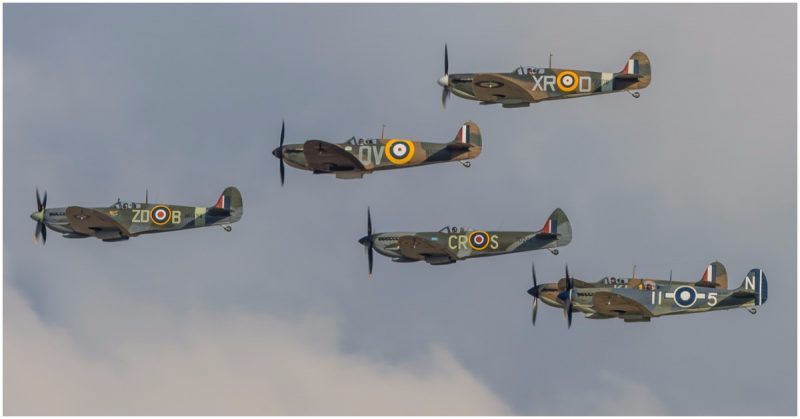
 When airshow dates are announced, there are always some that just leap out at you as "must attend" events and a celebration of the Battle of Britain at Duxford has to be one of those. It is true that Duxford's other 2010 shows, the May Air Display and Flying Legends had strong "Battle of Britain" themes, but the September "Battle of Britain Airshow" was the main celebration of the achievements of the RAF in 1940.